
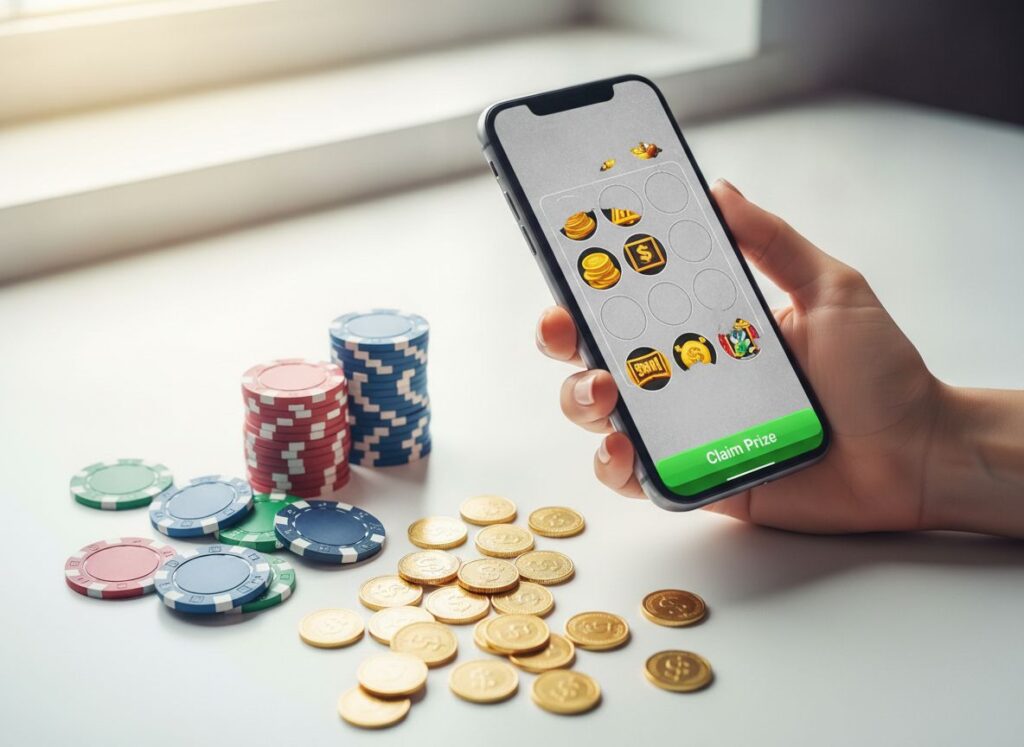
Online scratch cards offer Indian players a quick, exciting way to gamble for real money from home. Unlike traditional lottery scratches, these digital instant-win games operate on predetermined outcomes set by the platform’s Random Number Generator (RNG) before you ever reveal a symbol. This guide covers everything you need to know: how the games work, what legal and safety checks matter in India, how to start playing safely, and practical strategies to control your spending and maximize your withdrawal success.
What Online Scratch Cards Are and How They Work
Online scratch cards are instant-win casino games where you purchase a virtual card, reveal hidden symbols (usually by tapping or clicking), and instantly discover if you’ve won a prize. The defining feature is that the outcome is already determined by the game’s RNG algorithm before the reveal animation plays—the scratching action itself is purely visual and cannot change your result.
| Element | What it means | Why it matters |
|---|---|---|
| RNG (Random Number Generator) | A mathematical engine that calculates all possible outcomes before you play | Ensures fairness and prevents manipulation; every card has a pre-set result independent of your actions |
| Instant-win format | Results are shown immediately after you reveal symbols | Makes scratch cards faster and more exciting than traditional casino games; no waiting for draws |
| Predetermined outcome | The win or loss is locked in the moment you purchase the card | The scratching motion is cosmetic; you cannot influence the result by how fast or slow you reveal |
| Paytable | A table showing which symbol combinations pay out and how much | Tells you the odds and prize tiers before you buy; different cards have different paytables |
| Stake (bet amount) | The amount of real money you spend on a single card | Controls your risk; lower stakes mean smaller potential wins and losses |
| Theme and design | Visual style, symbols, and branding of the card | Affects user experience and engagement; some themes may appeal more to Indian players |
RNG, RTP, and the Pre-Set Result Model
The RNG is the heart of fair online scratch cards. It is a certified algorithm that generates a random number for every card you purchase. This number determines whether you win, lose, or hit a bonus—all before you tap the screen. The outcome cannot be changed by scratching speed, device type, time of day, or any other factor. Reputable platforms use independently audited RNG systems to comply with gambling regulations.
RTP (Return to Player) is a statistical measure showing what percentage of all money wagered on a scratch card eventually returns to players over thousands of plays. For example, an RTP of 92% means that theoretically, over the long run, players recoup 92 paise for every rupee wagered. However, RTP is not a guarantee for your single session—you may win big, lose everything, or break even depending on luck. Understanding RTP helps you compare cards and manage expectations.
Scratch Animation, Symbols, and Paytables
Each online scratch card uses symbols and matching mechanics to determine prizes. Common features include:
- Matching symbols – Align three or more identical symbols to win the displayed prize
- Bonus icons – Special symbols that unlock free cards, multipliers, or progressive jackpots
- Instant prizes – Fixed cash amounts shown on matching combinations
- Multiplier symbols – Increase your stake or recent win by a set factor (e.g., 2x, 5x, 10x)
- Scatter symbols – Often trigger bonus rounds or extra reveals without needing to match
- Wild cards – Substitute for other symbols to help create winning combinations
Is It Legal to Play in India?
The legal status of online scratch cards in India is complex and depends on your state of residence and the operator’s license. Unlike some Asian jurisdictions with clear gambling frameworks, India lacks a unified national law. Instead, states have their own regulations, and many do not explicitly permit or ban online gambling. This makes it your responsibility to verify whether playing is legal where you live and whether your chosen platform complies with local rules.
| Topic | What to check | Practical takeaway |
|---|---|---|
| State gaming laws | Research your state’s stance on online gaming and gambling | Some states (e.g., Goa, Sikkim) have licensed operators; others have gray areas or bans |
| Operator license | Verify the platform holds a valid gaming license in a recognized jurisdiction | Licensed platforms (e.g., operators based in Malta, Curacao, UK) usually offer better protections |
| Age verification | Confirm the site checks that you are 18+ before allowing play | Required by law in most jurisdictions; protects minors and validates your account |
| Terms of service clarity | Read the full terms before depositing—especially KYC, withdrawals, and dispute resolution | Unclear terms are a red flag for untrustworthy operators |
| Responsible gambling controls | Ensure the platform offers deposit limits, self-exclusion, and account pause tools | Shows the operator prioritizes player safety; required by most licenses |
| Payment security | Check that the site uses HTTPS encryption and trusted payment gateways | Protects your financial data from theft and fraud |
What Indian Players Should Verify Before Depositing
Before you deposit any money, complete a simple pre-deposit checklist. First, verify that you are at least 18 years old and that your state of residence does not explicitly ban online gambling. Check the operator’s license by visiting its website footer or help section—look for mentions of jurisdictions like Malta, Curacao, or the UK Gambling Commission.
Next, read the full terms of service, especially sections on KYC (Know Your Customer), deposits, withdrawals, and bonus wagering. KYC is a legal requirement that asks you to verify your identity with documents like a PAN card, Aadhaar, or passport before you withdraw winnings. This is not optional; skipping it will prevent cashouts. Finally, confirm that the platform offers responsible gambling tools such as deposit limits, session timeouts, and self-exclusion options. Availability of these tools signals a trustworthy operator committed to player safety.
How to Start Playing Step by Step
Playing online scratch cards for real money follows a simple flow: create an account, fund it, choose a card, set your stake, and reveal. Here are the key steps for Indian players:
- Sign up on a reputable platform – Provide basic information (name, email, date of birth, phone number) and verify your email
- Complete initial KYC – Upload identity proof (PAN, Aadhaar, or passport) and address proof; this may take a few hours to a few days
- Deposit funds – Choose a payment method (UPI, net banking, e-wallets, or bank transfer) and transfer money to your account
- Browse scratch card games – Review themes, RTP rates, and prize tiers to find a game that suits your budget
- Select your stake – Choose how much to wager on a single card (e.g., ₹10, ₹50, ₹100)
- Purchase and reveal – Click “Buy” to lock in your card, then tap or click to reveal symbols and discover your result instantly
Account Setup, Deposit, and KYC
Registration is straightforward. Visit the platform, click “Sign Up,” and enter your email, phone number, and a strong password. You will be sent a verification link to confirm your email. Next, complete basic KYC: upload a clear photo of your identity document (PAN, Aadhaar, or passport) and proof of address (utility bill or bank statement). Most platforms process these within 24 hours, though delays can occur during high volume.
Once KYC is approved, you can deposit. Indian platforms typically support UPI, net banking, e-wallets (like PayTM or Google Pay), and bank transfers. Choose the method most convenient for you, enter the amount, and follow the payment gateway instructions. Your funds should appear in your account within minutes. Note that some platforms may request a second KYC verification before your first withdrawal, so expect additional document checks when you cash out.
Choosing a Scratch Card and Placing a Stake
With funds in your account, browse the scratch card library. Here’s how to select wisely:
- Compare RTP rates – Choose cards with RTP of 90% or higher; avoid anything below 85%
- Review the paytable – Check the prize tiers and frequency of wins; some cards offer frequent small wins, others offer rare big jackpots
- Pick a theme that appeals to you – Whether it’s sports, luxury, festivals, or fantasy, theme affects engagement but not odds
- Start with low stakes – Beginners should begin with ₹10–₹50 cards to learn the mechanics without risking large sums
- Note the minimum and maximum stake – Ensure the range fits your bankroll and comfort level
How to Judge a Scratch Card Before You Buy
Not all scratch cards offer the same value. Before spending your money, evaluate each game using a simple decision framework that covers odds, volatility, prize structure, and operator reputation.
| Check | What to look for | Why it matters |
|---|---|---|
| RTP rate | Games with 90–96% RTP are fairer than those below 85% | Higher RTP means better long-term payout potential |
| Volatility | Low volatility = frequent small wins; high volatility = rare big wins | Matches your risk appetite and bankroll size |
| Prize structure | Review the paytable for number of prize tiers and maximum jackpot | Shows whether wins are clustered at the top or spread evenly |
| Provider reputation | Check if the game developer is a known software studio (NetEnt, Pragmatic, Microgaming, etc.) | Established providers are audited and trustworthy; unknown developers may be risky |
| Minimum withdrawal threshold | Confirm the minimum cashout is ₹100–₹500, not ₹5,000+ | High minimums delay access to your winnings and hurt smaller players |
| Payout speed | Look for platforms offering withdrawals within 24–48 hours | Slow payouts suggest operational issues or deliberate delays |
| Currency support | Verify the platform accepts Indian Rupees (INR) and does not charge conversion fees | Simplifies deposits and withdrawals without hidden exchange costs |
Red Flags and Safer Choices
Avoid platforms that show warning signs: vague terms of service, no clear licensing information, no responsible gambling tools, unrealistic bonus promises (e.g., “guaranteed 200% returns”), or missing contact details. Be especially cautious of apps that request unusual permissions or are not available in official app stores.
Safer choices are platforms licensed in established jurisdictions (Malta, Curacao, UK), operated by companies with physical offices and years of history, and endorsed by gambling authorities or player review sites. When in doubt, start with a small deposit and test the platform’s responsiveness and withdrawal speed before committing larger sums.
Ways to Play Responsibly and Control Risk
Online scratch cards are designed for quick play and instant gratification, making them prone to overspending. Without deliberate controls, you can lose your bankroll faster than expected. Here are practical strategies to stay in control:
- Set a daily deposit limit – Decide the maximum you will deposit per day (e.g., ₹500) and stick to it
- Use a separate budget – Treat gambling funds as entertainment money you are willing to lose, not money needed for bills or savings
- Track your spending – Keep a log of deposits and losses to see your real spending patterns over time
- Play during set times – Limit gambling to specific hours (e.g., evenings on weekends) rather than constant play
- Take breaks between cards – Wait a few seconds or minutes between plays to avoid impulse clicking
- Stop after a loss streak – If you lose 5–10 cards in a row, step away; don’t chase losses
- Celebrate wins responsibly – If you win, withdraw a portion of your winnings and play with a smaller amount
Deposit Limits, Session Limits, and Stop-Loss Rules
The simplest way to control risk is to set strict limits before you play. Most reputable platforms allow you to set a daily, weekly, or monthly deposit cap. If your limit is ₹1,000 per week, the platform will block further deposits once you reach it. Use this feature every time.
A stop-loss rule helps you exit before losses pile up. For example, decide that if you lose ₹500, you stop playing for the day. This prevents the common trap of “playing to recover” losses, which usually makes things worse. Pair this with timeboxing: play for only 30 minutes to 1 hour per session. This keeps you from drifting into hours of continuous play and decisions.
Why Demo Mode Is Useful Before Real Money Play
Many platforms offer free demo versions of their scratch cards. These let you play with virtual credits to learn the UI, understand how symbols and payouts work, and get a feel for the game’s pacing—all without risking real money. Demo mode is especially valuable for beginners.
- Learn the interface – Understand how to navigate menus, select stakes, and reveal cards
- Test stake options – See how different bet amounts affect your play speed and decision-making
- Evaluate game volatility – Play several demo rounds to observe win frequency and prize size
- Build confidence – Familiarize yourself with the experience before switching to real money
- No financial risk – You cannot lose real money, so you can experiment freely
Note that demo mode winnings are not cashable; you must switch to real money mode and deposit to withdraw actual prizes.
How Withdrawals Usually Work
Withdrawing your winnings involves several steps and potential delays. Understanding the process before depositing helps you avoid frustration and ensures you meet all requirements.
| Step | What happens | What to confirm |
|---|---|---|
| Submit withdrawal request | You enter the amount and choose your payment method (bank transfer, UPI, e-wallet) | The amount does not exceed your current balance and meets the minimum withdrawal threshold |
| Account verification | The platform reviews your account for any missing or incomplete KYC | Your identity documents, address proof, and payment method are all verified and up-to-date |
| Bonus wagering check | If you claimed a bonus, the platform verifies you met the wagering requirement (e.g., played 35x your deposit) | You have completed all wagering conditions; unmet conditions can lock your withdrawal |
| Pending status | Your request enters a queue; the platform processes withdrawals in batches or in order | This can take 24–72 hours depending on platform volume and method |
| Payment processing | The operator sends your funds to your chosen payment gateway or bank | The bank or e-wallet processes the transfer, which may take an additional 1–3 business days |
| Funds received | Money arrives in your bank account or e-wallet | Check your account and confirm the amount matches your request (no fees deducted unexpectedly) |
Common Payout Delays and How to Avoid Them
Payout delays are one of the biggest frustrations for Indian players. Most delays are avoidable if you prepare before depositing. First, read the withdrawal terms carefully: some platforms state they process within 24 hours, others take 5–7 business days. Choose platforms that promise 24–48 hour payouts.
Second, complete full KYC immediately after signing up, not only when you try to withdraw. Platforms often request additional verification at withdrawal time, and delays waiting for documents can stretch the process. Third, if you claimed a bonus, understand the exact wagering requirement (e.g., “play 30x the bonus amount”) and confirm you have met it before requesting a payout. Unmet wagering conditions are the most common reason for withdrawal denials. Finally, use payment methods with proven reliability: bank transfers and UPI are usually faster than e-wallets. Before depositing, check recent player reviews mentioning withdrawal speed.
Mistakes Indian Players Should Avoid
Learning from others’ mistakes can save you money and frustration. Here are the most common pitfalls Indian players fall into:
- Chasing losses – Losing ₹2,000 and immediately depositing ₹5,000 more to “recover” usually leads to losing the fresh ₹5,000 as well; accept losses and walk away
- Skipping or delaying KYC – You cannot withdraw without completed KYC, and incomplete documents create delays and frustration; verify your identity on day one
- Not reading the terms – Ignoring bonus wagering requirements, withdrawal minimums, or withdrawal timelines leads to surprises and potential account locks
- Using unverified apps – Downloaded APKs or third-party apps outside official stores often contain malware or lead to scams; always use the official website or app store version
- Playing on unlicensed platforms – Operators without visible licensing information or in unregulated jurisdictions may refuse payouts or steal data; verify the license before depositing
- Betting more than you can afford – Starting with high stakes to chase quick profits usually backfires; low stakes give you more play time and lower financial risk
- Ignoring responsible gambling signals – If you feel out of control, skip the game entirely and contact a responsible gambling helpline rather than hoping luck turns around
Common Myths About Winning Scratch Cards
Many myths persist about how to win at scratch cards. The most dangerous is the belief that technique affects outcomes. Scratching faster, tapping specific areas, holding your phone at an angle, or playing at certain times of day has zero impact on the RNG. The result is locked the moment you purchase the card, period.
Another myth is that big bonuses mean every game is profitable. A ₹500 bonus with a 40x wagering requirement means you must play through ₹20,000 before you can withdraw a single rupee. Over thousands of plays at a 92% RTP, you will statistically lose money despite the bonus. Bonuses are marketing tools, not profit opportunities. Finally, some believe that past losses mean a win is “due.” This is the gambler’s fallacy. Each card is independent; a losing streak tells you nothing about the next card’s odds.